
Preparing for a trade show involves many moving parts. There is the event itself, the booth design, printed graphics, furniture, lighting, technology, transportation, installation, and, of course, the people who will represent your company. Managing all these details separately can quickly become stressful.
This is where trade show exhibit companies Salt Lake City can help. An experienced exhibit company can take your initial idea and turn it into a finished booth that is ready for visitors when the show opens. Understanding how this process works can make it easier to plan your next event.
It Starts With Understanding Your Requirements
The exhibit process usually begins with a conversation about your event and your goals. Before a design is created, the exhibit team needs to understand what you want to achieve.
Are you launching a product? Looking for new leads? Meeting existing customers? Building awareness for a new brand? Each objective can call for a different booth layout.
Your available booth space also matters. The dimensions, location, ceiling height, and venue regulations can affect what can be installed.
A good starting discussion should cover your event dates, booth size, budget, branding requirements, products or services being presented, and the type of visitor experience you want to create.
Developing the Booth Concept
Once the requirements are clear, the design process can begin.
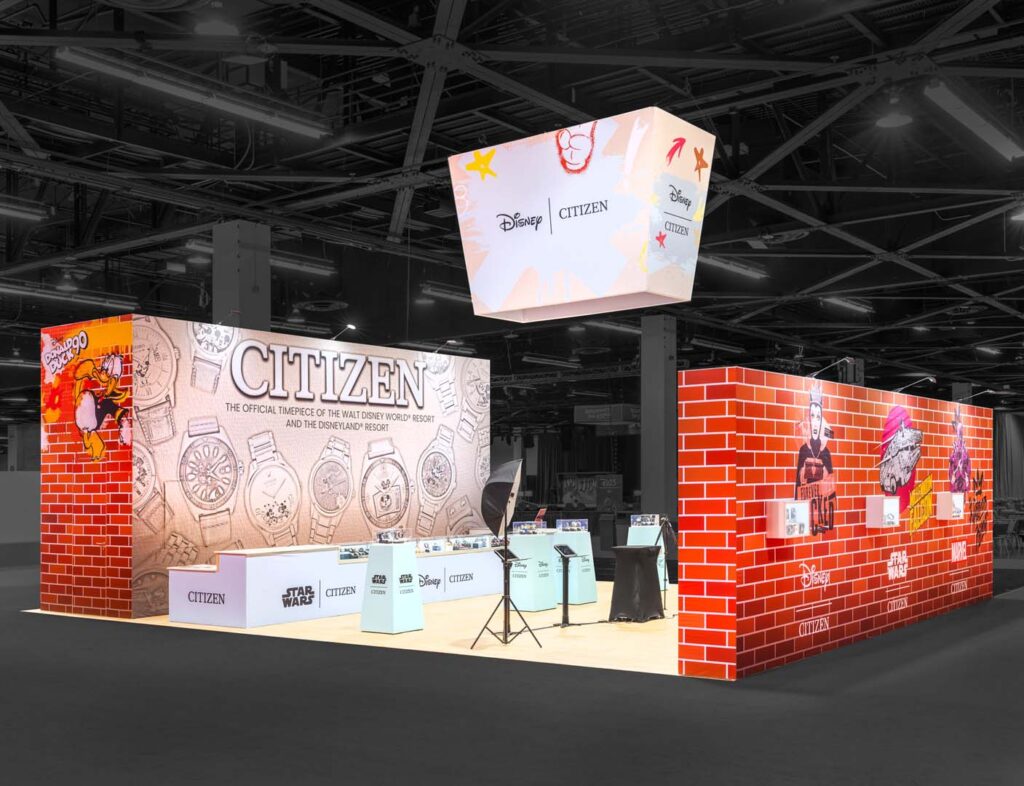
The first concept usually focuses on the overall appearance and layout. This can include the position of branding, counters, product displays, seating areas, storage, lighting, and digital screens.
At this stage, it is important to think about the visitor’s perspective. Someone walking through a busy exhibition hall should be able to understand who you are and what you offer without having to search for the information.
A strong concept balances visual appeal with practical use. A booth may look impressive in a rendering, but if your staff cannot comfortably work in it or visitors cannot move through it easily, the design needs another look.
Turning Your Brand Into a Physical Space
Your trade show exhibit should feel connected to the rest of your marketing.
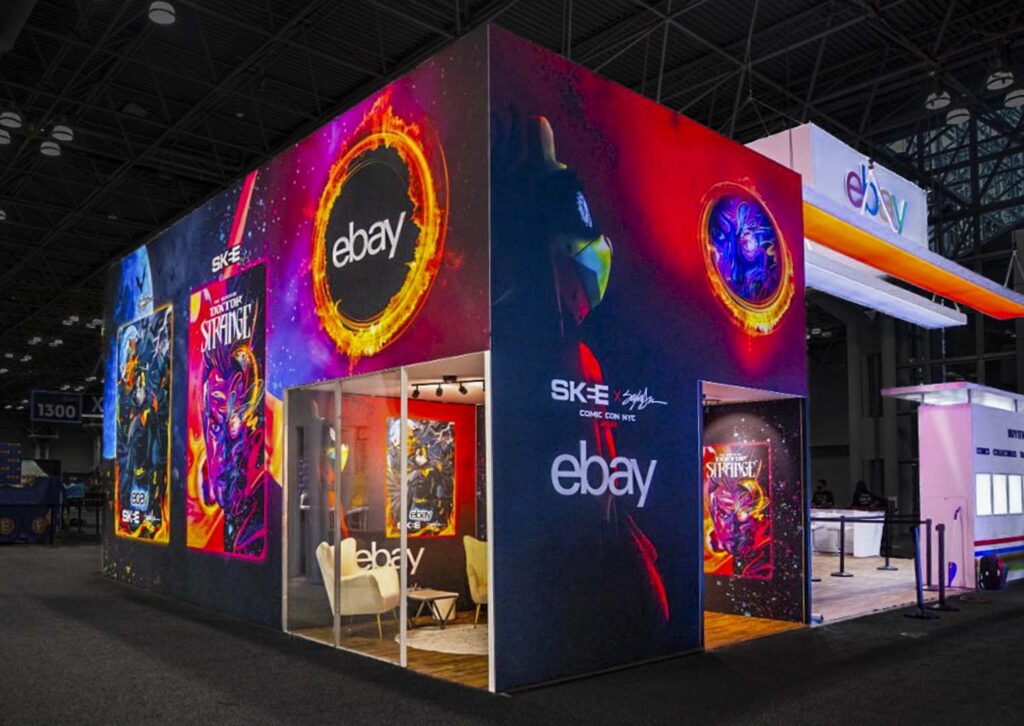
Brand colors, logos, typography, photography, and messaging can be incorporated into walls, counters, hanging signs, displays, and graphics.
However, branding should remain readable. Too many competing messages can make a booth feel cluttered.
Instead, focus on the information visitors need first. A clear headline can attract attention, while supporting graphics or digital content can provide additional details once someone enters the space.
This is particularly important for companies with technical products or complex services. The booth does not need to explain everything at once. It should create enough interest to start a conversation.
Choosing Materials and Components
The next stage involves selecting the physical components that will make up the exhibit.
Depending on the booth size and design, this could include modular walls, counters, shelving, product displays, flooring, lighting, furniture, monitor stands, and storage.
The right combination depends on how you plan to use the space.
For instance, a company showcasing physical products may need sturdy display areas, while a consulting firm may need more seating for conversations. A technology business may want multiple screens or interactive displays.
Experienced trade show exhibit companies Salt Lake City can help match these components to the booth’s purpose instead of simply filling the space with unnecessary features.
Graphics and Signage Need Careful Planning
Large-format graphics are one of the most visible parts of an exhibit. They should be prepared well before installation.
Before production, review every piece of written content. Check spelling, phone numbers, website addresses, product names, and other important details.
It is also important to follow the required file specifications. Poor-quality images can become noticeable when enlarged, while incorrect dimensions may cause problems during installation.
Your exhibit provider can usually explain the required file formats, resolution, bleed, and sizing information.
Managing Technology
Modern exhibits often include some form of technology. A simple monitor can show videos or presentations, while interactive screens can allow visitors to explore products or services.
Technology should support your message rather than become the main attraction.
Before shipping equipment to the venue, test everything. Make sure screens, laptops, tablets, cables, and other devices work as expected.
You should also plan for practical issues such as power access and cable management. Loose cables can create both visual and safety problems.
Preparing for Installation
After the design and production stages are complete, the focus shifts to getting everything ready at the venue.
Installation requires coordination between the exhibit company, venue, event organizer, and sometimes other contractors.
The team needs to know when the exhibit hall opens for move-in, where materials should be delivered, and what rules apply to installation.
The booth is then assembled according to the approved design. Graphics, furniture, lighting, displays, and technology are put into position.
A professional installation team can also check the finished exhibit before the event begins.
The Final Walkthrough
A final inspection is an important part of the process.
Walk around the completed booth and check it from different angles. Is the company name visible from the aisle? Can visitors easily enter? Are important graphics blocked by furniture? Does the lighting work properly?
Check storage areas, product displays, literature, screens, and any lead collection equipment as well.
This is the final opportunity to make small adjustments before attendees arrive.
Finding the Right Exhibit Partner
When comparing trade show companies Salt Lake City, look beyond the appearance of previous booths. Consider the complete service they provide.
Ask about design support, project management, production, transportation, installation, dismantling, and communication throughout the project. Clear responsibilities can prevent confusion closer to the event.
It is also useful to review previous work that is similar to your booth size and industry. This gives you a better understanding of what the company can realistically deliver.
From an Idea to a Finished Exhibit
A trade show booth does not come together in a single step. It moves through several stages, from understanding the event requirements to developing the concept, producing graphics and components, coordinating transportation, and completing installation.
Working with experienced trade show exhibit companies Salt Lake City can help bring these stages together under one process.
The goal is not simply to create a booth that looks good. It is to create a space that represents your brand, supports your team, and gives visitors a clear reason to stop and start a conversation.
With thoughtful planning and good communication between your company and exhibit partner, the journey from the first concept to the finished installation can be much more straightforward.